Fabrice Melquiot 2013, dal Munchhausen di Raspe/Bürger. Théâtre Am Stram Gram Geneva: la fiaba del barone bugiardo come trattato sull'arte del mentire, regia Joan Mompart, scene Cristian Taraborrelli.
Fabrice Melquiot 2013, from Raspe/Bürger's Munchhausen. Théâtre Am Stram Gram Geneva.
Fabrice Melquiot 2013, d'après Munchhausen de Raspe/Bürger.
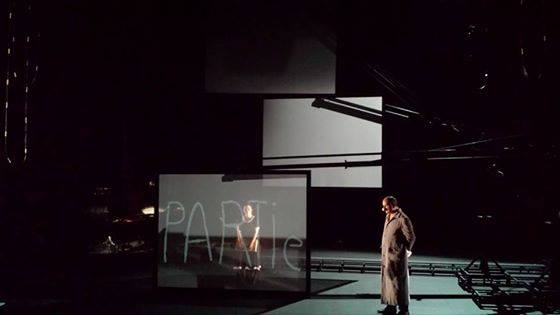
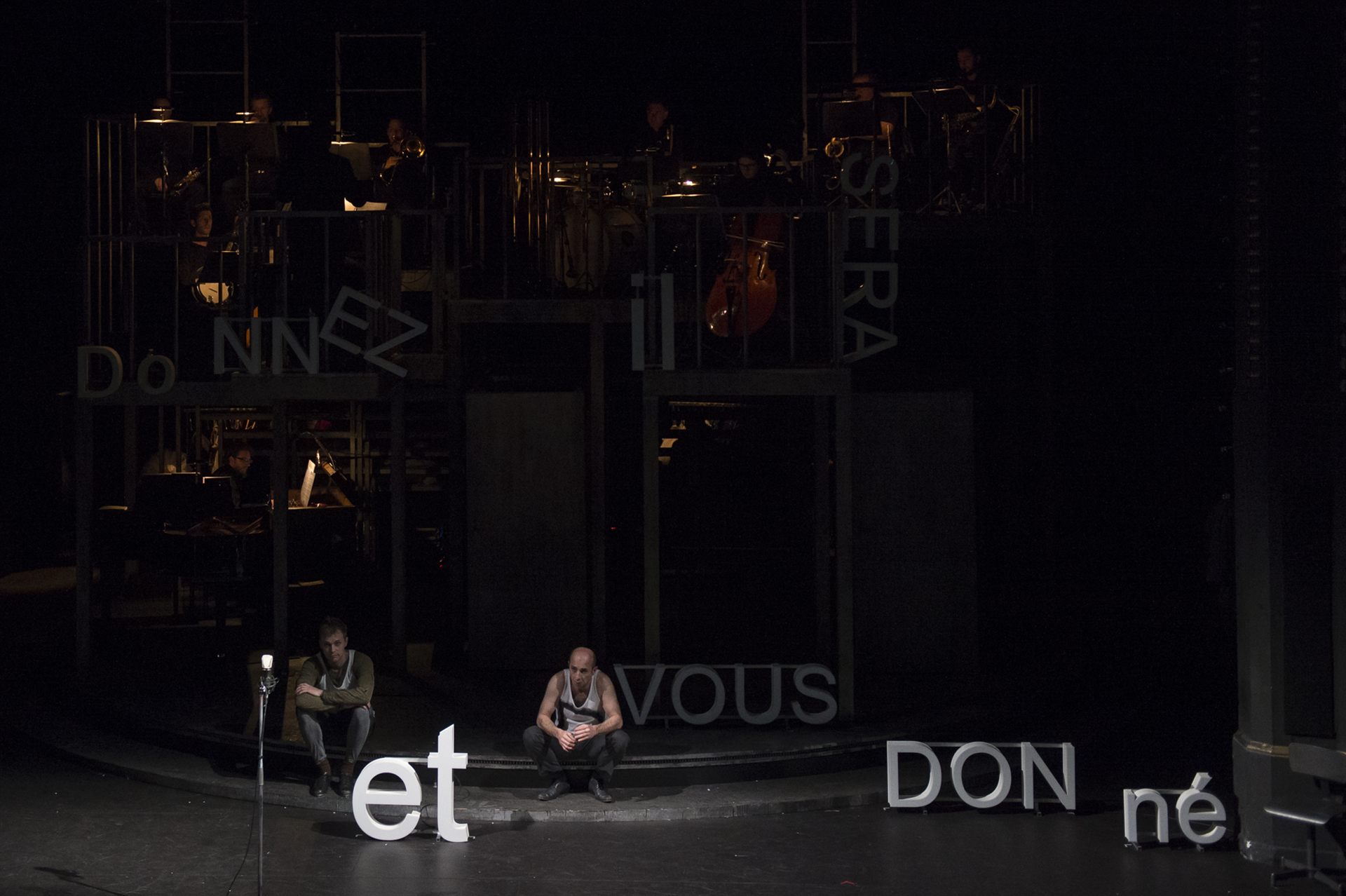
Münchhausen? — Fabrice Melquiot’s theatrical adaptation of the legendary Baron, directed by Joan Mompart with set design by Cristian Taraborrelli. A mobile scenography animated by videomapping that celebrates the fantasy and absurdity of Baron Münchhausen’s world. Through digital special effects and theatrical cunning, the audience is projected into the heart of the Baron’s unheard-of adventures.
Münchhausen? — l’adattamento teatrale di Fabrice Melquiot del leggendario Barone, diretto da Joan Mompart con scenografia di Cristian Taraborrelli. Una scenografia mobile animata da un videomapping che celebra la fantasia e l’assurdità del mondo del Barone di Münchhausen. Grazie ad abili effetti speciali digitali e astuzie teatrali, veniamo proiettati al centro delle inaudite avventure del Barone.
Münchhausen? — l’adaptation théâtrale de Fabrice Melquiot du légendaire Baron, mise en scène par Joan Mompart avec scénographie de Cristian Taraborrelli. Une scénographie mobile animée par un vidéomapping qui célèbre la fantaisie et l’absurdité du monde du Baron de Münchhausen. Grâce à d’habiles effets spéciaux numériques et des astuces théâtrales, nous sommes projetés au cœur des aventures inouïes du Baron.
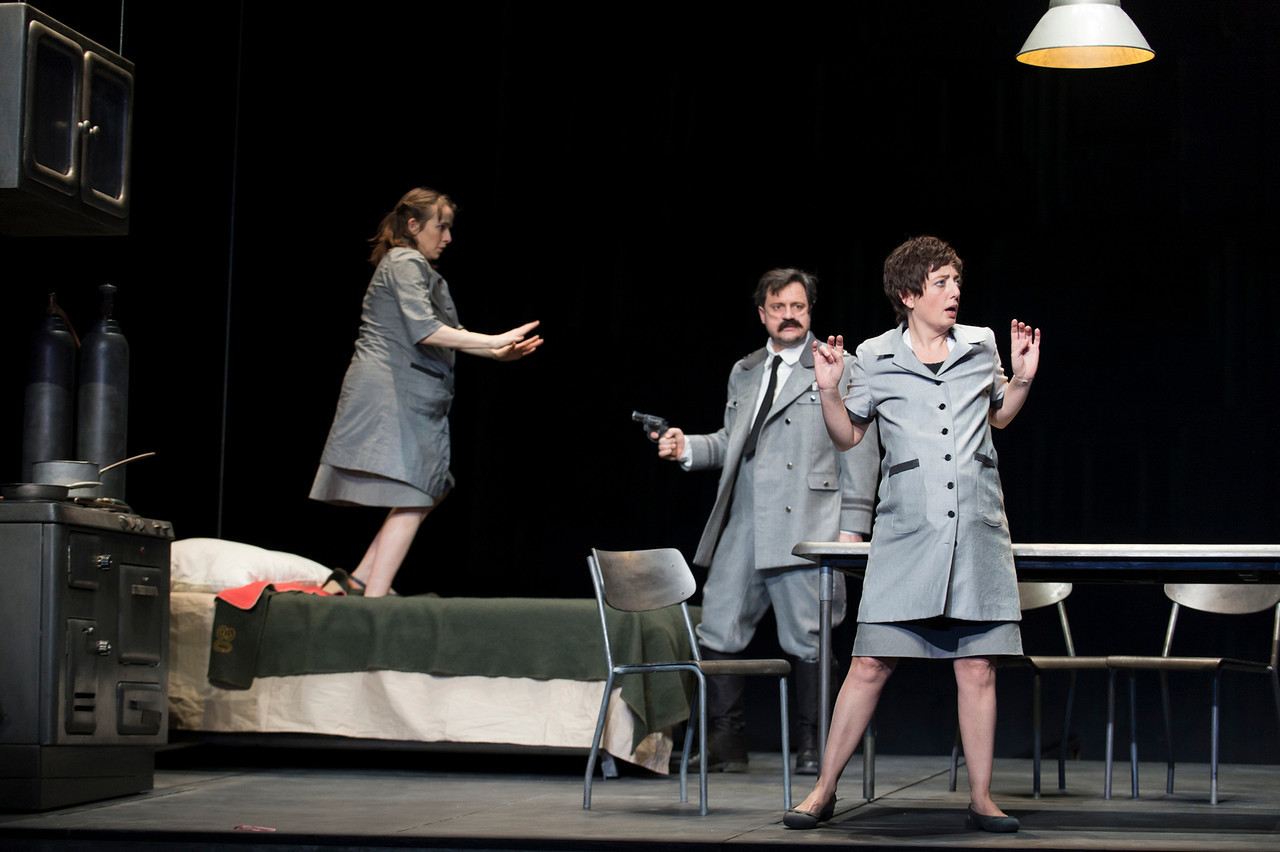
An ageing Baron lies in a hospital bed, strapped down, tended by nurses, visited by his twenty-seventh son on his thirtieth birthday. He refuses to die. He has been alive for two hundred and ninety-six years. He rises, climbs onto the bed frame with trembling knees, and demands his horse. The adventure begins — or rather, begins again — because for Münchhausen, reality is only the overture to something far more interesting.
Fabrice Melquiot’s adaptation reinvents the 18th-century tales of Karl Friedrich Hieronymus, Baron von Münchhausen. He gives the Baron a son — named simply “Moi” — who, at thirty, can no longer stand his father’s stories. Yet through the telling, something shifts: the son becomes the narrator, the stories become his own, and what was once paternal mythology transforms into a personal archaeology of the imagination.
There are cyclops and Russians, lions and crocodiles, a cannonball ridden like Bucephalus, Venus and Vulcan, a journey to the centre of the earth and another to the depths of the sea, a gigantic whale, fabulous apparitions and magical disappearances. The Baron’s companions bear impossible gifts: Cavallo, faster than the wind; Hercule, stronger than the mythological original; Ouragane, whose breath surpasses hurricanes; J’écoute, who can hear the grass grow.
Un Barone anziano giace in un letto d’ospedale, legato con cinghie, accudito da infermiere, visitato dal suo ventisettesimo figlio nel giorno del suo trentesimo compleanno. Rifiuta di morire. È vivo da duecentonovantasei anni. Si alza, sale sulla struttura del letto con le ginocchia tremanti e chiede il suo cavallo. L’avventura comincia — o piuttosto ricomincia — perché per Münchhausen la realtà è solo l’ouverture di qualcosa di molto più interessante.
L’adattamento di Fabrice Melquiot reinventa i racconti settecenteschi di Karl Friedrich Hieronymus, Barone di Münchhausen. Dona al Barone un figlio — chiamato semplicemente “Moi” — che a trent’anni non sopporta più le storie di suo padre. Eppure, nel raccontarle, qualcosa cambia: il figlio diventa il narratore, le storie diventano le sue, e quella che era mitologia paterna si trasforma in un’archeologia personale dell’immaginazione.
Ci sono ciclopi e russi, leoni e coccodrilli, una palla di cannone cavalcata come Bucefalo, Venere e Vulcano, un viaggio al centro della terra e un altro nelle profondità del mare, una balena gigantesca, apparizioni favolose e sparizioni magiche. I compagni del Barone portano doni impossibili: Cavallo, più veloce del vento; Ercole, più forte dell’originale mitologico; Ouragane, il cui soffio supera gli uragani; J’écoute, che può sentire l’erba crescere.
Un Baron âgé gît dans un lit d’hôpital, sanglé, soigné par des infirmières, visité par son vingt-septième fils le jour de ses trente ans. Il refuse de mourir. Il est vivant depuis deux-cent-nonante-six ans. Il se lève, grimpe sur le cadre du lit avec les genoux qui flageolent, et réclame son cheval. L’aventure commence — ou plutôt recommence — car pour Münchhausen, la réalité n’est que l’ouverture de quelque chose de bien plus intéressant.
L’adaptation de Fabrice Melquiot réinvente les récits du XVIIIe siècle de Karl Friedrich Hieronymus, Baron de Münchhausen. Il donne au Baron un fils — nommé simplement « Moi » — qui, à trente ans, ne supporte plus les histoires de son père. Pourtant, en les racontant, quelque chose bascule : le fils devient le narrateur, les histoires deviennent les siennes, et ce qui était mythologie paternelle se transforme en une archéologie personnelle de l’imagination.
Il y a des cyclopes et des Russes, des lions et des crocodiles, un boulet de canon qu’on enfourche comme Bucéphale, Vénus et Vulcain, un voyage au centre de la terre et un autre dans les profondeurs de la mer, une baleine gigantesque, des apparitions fabuleuses et des disparitions magiques. Les compagnons du Baron portent des dons impossibles : Cavallo, plus rapide que le vent ; Hercule, plus fort que l’original mythologique ; Ouragane, dont le souffle surpasse les ouragans ; J’écoute, qui peut entendre l’herbe pousser.
Gallery


La Visione
Together with Joan Mompart, Cristian Taraborrelli conceived a multidimensional space shaped like a sphere — evoking at once the Moon, the Baron’s cannonball, and the belly of the whale. The design deliberately abandoned the sensation of gravity: up and down could be inverted, walls became floors, and the hospital bed transformed into a ship, a cannon, a cosmic vehicle.
The scenography was a mobile architecture animated by videomapping, created by Brian Tornay. Digital projections wrapped around the set pieces, turning flat surfaces into oceanic depths, lunar landscapes, and the inside of a gigantic whale. The challenge was to merge the purest theatrical craftsmanship — the artisanal tradition of rope and canvas — with the most advanced digital technologies available to contemporary stages.
The Baron’s fantastical universe demanded this reconciliation: every lie told on stage had to be visually believable, every impossible journey had to feel physically real. The videomapping did not merely illustrate the text — it extended the storytelling into the architecture itself, making the set a living, breathing participant in the Baron’s mythology.
Insieme a Joan Mompart, Cristian Taraborrelli ha concepito uno spazio multidimensionale a forma di sfera — evocando al contempo la Luna, la palla di cannone del Barone e il ventre della balena. Il progetto abbandonava deliberatamente la sensazione di gravità: l’alto e il basso potevano invertirsi, i muri diventavano pavimenti, e il letto d’ospedale si trasformava in una nave, un cannone, un veicolo cosmico.
La scenografia era un’architettura mobile animata da videomapping, creato da Brian Tornay. Le proiezioni digitali avvolgevano gli elementi scenici, trasformando superfici piatte in profondità oceaniche, paesaggi lunari e l’interno di una balena gigantesca. La sfida era fondere l’artigianato teatrale più puro — la tradizione di corde e tela — con le tecnologie digitali più avanzate delle scene contemporanee.
L’universo fantastico del Barone esigeva questa conciliazione: ogni bugia raccontata sulla scena doveva essere visivamente credibile, ogni viaggio impossibile doveva sembrare fisicamente reale. Il videomapping non si limitava a illustrare il testo — estendeva la narrazione nell’architettura stessa, rendendo la scenografia una partecipante viva e pulsante nella mitologia del Barone.
Avec Joan Mompart, Cristian Taraborrelli a conçu un espace multidimensionnel en forme de sphère — évoquant à la fois la Lune, le boulet de canon du Baron et le ventre de la baleine. Le dispositif abandonnait délibérément la sensation de gravité : le haut et le bas pouvaient s’inverser, les murs devenaient des sols, et le lit d’hôpital se transformait en navire, en canon, en véhicule cosmique.
La scénographie était une architecture mobile animée par le vidéomapping, créé par Brian Tornay. Les projections numériques enveloppaient les éléments scéniques, transformant des surfaces planes en profondeurs océaniques, paysages lunaires et intérieur d’une baleine gigantesque. Le défi était de fusionner l’artisanat théâtral le plus pur — la tradition de la corde et de la toile — avec les technologies numériques les plus avancées des scènes actuelles.
L’univers éminemment fantaisiste du Baron exigeait cette conciliation : chaque mensonge raconté sur scène devait être visuellement crédible, chaque voyage impossible devait sembler physiquement réel. Le vidéomapping ne se contentait pas d’illustrer le texte — il prolongeait la narration dans l’architecture même, faisant du décor un participant vivant et palpitant à la mythologie du Baron.
L’Arte del Mentire — perché un punto interrogativo
The title carries a punctuation mark that is not in the source: Münchhausen?. That question mark is the entire dramaturgy. The Baron is not staged as a liar to be unmasked, nor as a fabulist to be celebrated — he is staged as a question: at what moment does a story become a lie? At what moment does a lie become an identity? At what moment does an identity become true?
Long before the language of fake news and post-truth, before social media made every biography a personal myth, the Baron had already invented the contemporary art of self-mythologisation. He does not lie to deceive: he lies to exist beyond the narrowness of fact. Mompart and Taraborrelli inscribe this very ambiguity in the title — the question mark is the audience’s seat. The spectator is not asked to believe or disbelieve, but to inhabit the gap.
This is also why the show, programmed for young audiences, refuses to be didactic. There is no moral about telling the truth. There is, instead, a celebration of the imagination as a survival technique — the Baron strapped to the hospital bed who refuses to die because, as long as he tells, he is alive. Storytelling as breath. The lie as biography.
Il titolo porta un segno d’interpunzione che non c’è nelle fonti: Münchhausen?. Quel punto interrogativo è tutta la drammaturgia. Il Barone non viene messo in scena come un bugiardo da smascherare, né come un fabulatore da celebrare — viene messo in scena come una domanda: a che punto un racconto diventa una menzogna? A che punto una menzogna diventa un’identità? A che punto un’identità diventa vera?
Molto prima del lessico delle fake news e della post-verità, prima che i social rendessero ogni biografia un mito personale, il Barone aveva già inventato l’arte contemporanea dell’auto-mitologia. Non mente per ingannare: mente per esistere oltre la strettoia del fatto. Mompart e Taraborrelli iscrivono nel titolo proprio questa ambiguità — il punto interrogativo è il posto dello spettatore. Non gli viene chiesto di credere o non credere, ma di abitare lo scarto.
È anche per questo che lo spettacolo, pensato per il pubblico giovane, rifiuta di essere didascalico. Non c’è una morale sul dire la verità. C’è, invece, una celebrazione dell’immaginazione come tecnica di sopravvivenza — il Barone legato al letto d’ospedale che rifiuta di morire perché, finché racconta, è vivo. Il racconto come respiro. La menzogna come biografia.
Le titre porte un signe de ponctuation absent des sources : Münchhausen?. Ce point d’interrogation est toute la dramaturgie. Le Baron n’est pas mis en scène comme un menteur à démasquer, ni comme un fabulateur à célébrer — il est mis en scène comme une question : à quel moment un récit devient-il un mensonge ? À quel moment un mensonge devient-il une identité ? À quel moment une identité devient-elle vraie ?
Bien avant le lexique des fake news et de la post-vérité, avant que les réseaux sociaux ne fassent de chaque biographie un mythe personnel, le Baron avait déjà inventé l’art contemporain de l’auto-mythologie. Il ne ment pas pour tromper : il ment pour exister au-delà de l’étroitesse du fait. Mompart et Taraborrelli inscrivent dans le titre cette ambiguïté même — le point d’interrogation est la place du spectateur. On ne lui demande pas de croire ou de ne pas croire, mais d’habiter l’écart.
C’est aussi pour cela que le spectacle, pensé pour le jeune public, refuse d’être didactique. Il n’y a pas de morale sur le fait de dire la vérité. Il y a, au contraire, une célébration de l’imagination comme technique de survie — le Baron sanglé au lit d’hôpital qui refuse de mourir parce que, tant qu’il raconte, il vit. Le récit comme souffle. Le mensonge comme biographie.
Scenography


The Venue
Münchhausen? premiered at the Théâtre Am Stram Gram in Geneva, one of Europe’s rare theatres dedicated to creation for all audiences from the youngest age. Under the artistic direction of Fabrice Melquiot since 2012, Am Stram Gram maintains a year-round professional programme and serves as an international centre for theatrical creation. The production then toured extensively across francophone Switzerland and into France — from Neuchâtel to Yverdon-les-Bains, from Belfort to Lausanne, from Villars-sur-Glâne to the Journées du Théâtre Suisse 2016, where it was selected as a representative work of Swiss theatrical excellence.
Münchhausen? ha debuttato al Théâtre Am Stram Gram di Ginevra, uno dei rari teatri europei dedicato alla creazione per tutti i pubblici fin dalla più tenera età. Sotto la direzione artistica di Fabrice Melquiot dal 2012, Am Stram Gram mantiene una programmazione professionale annuale e funge da centro internazionale per la creazione teatrale. La produzione ha poi girato ampiamente nella Svizzera francofona e in Francia — da Neuchâtel a Yverdon-les-Bains, da Belfort a Losanna, da Villars-sur-Glâne alle Journées du Théâtre Suisse 2016, dove è stata selezionata come opera rappresentativa dell’eccellenza teatrale svizzera.
Münchhausen? a été créé au Théâtre Am Stram Gram à Genève, l’un des rares théâtres européens dédiés à la création pour tous les publics dès le plus jeune âge. Sous la direction artistique de Fabrice Melquiot depuis 2012, Am Stram Gram maintient une programmation professionnelle annuelle et sert de centre international de création théâtrale. Le spectacle a ensuite tourné largement en Suisse romande et en France — de Neuchâtel à Yverdon-les-Bains, de Belfort à Lausanne, de Villars-sur-Glâne aux Journées du Théâtre Suisse 2016, où il a été sélectionné comme œuvre représentative de l’excellence théâtrale suisse.
Due Biografie — il Barone e il suo Autore
Karl Friedrich Hieronymus von Münchhausen — 1720–1797
The real Baron was born in Bodenwerder, in Lower Saxony, in 1720, into one of the oldest families of the Holy Roman Empire. As a young man he served as a page at the court of Anton Ulrich of Brunswick and followed him to Russia, where he joined the Imperial Russian Army and fought against the Ottomans in the Russo-Turkish War of 1735–1739. Returning to his estate in 1750, he spent the remaining decades of his life as a country gentleman, hunting, riding, and entertaining guests with stories of his Russian campaigns — stories that grew, with each retelling, more impossible and more dazzling. He never wrote a word of them. The hyperbole was a gift to his table; the publication, against his will, would embitter the last years of his life.
Il Barone vero nacque a Bodenwerder, nella Bassa Sassonia, nel 1720, da una delle più antiche famiglie del Sacro Romano Impero. Da giovane fu paggio alla corte di Anton Ulrich di Brunswick e lo seguì in Russia, dove entrò nell’Esercito Imperiale Russo e combatté contro gli Ottomani nella guerra russo-turca del 1735–1739. Tornato nella sua tenuta nel 1750, passò i decenni successivi come gentiluomo di campagna, cacciando, cavalcando e intrattenendo gli ospiti con racconti delle sue campagne russe — racconti che, ad ogni ripetizione, diventavano più impossibili e più folgoranti. Non ne scrisse mai una riga. L’iperbole era un dono per la sua tavola; la pubblicazione, contro la sua volontà, avrebbe amareggiato gli ultimi anni della sua vita.
Le véritable Baron est né à Bodenwerder, en Basse-Saxe, en 1720, dans l’une des plus anciennes familles du Saint Empire romain germanique. Jeune homme, il fut page à la cour d’Anton Ulrich de Brunswick et le suivit en Russie, où il rejoignit l’Armée impériale russe et combattit les Ottomans lors de la guerre russo-turque de 1735–1739. Revenu sur ses terres en 1750, il passa les décennies suivantes en gentilhomme campagnard, chassant, montant à cheval et divertissant ses hôtes par des récits de ses campagnes russes — des récits qui, à chaque répétition, devenaient plus impossibles et plus éblouissants. Il n’en écrivit jamais une ligne. L’hyperbole était un don pour sa table ; la publication, contre sa volonté, allait amer les dernières années de sa vie.
Rudolf Erich Raspe — 1736–1794
The man who turned the Baron into a literary myth was himself a character worthy of one. Raspe was a German scientist, librarian and writer, fluent in five languages, a member of the Royal Society of London, an authority on volcanology and gem collecting. He was also a thief: in 1775, accused of having pawned medals and gemstones from the Landgrave of Hesse’s collection, he fled Hannover overnight and reached England, where he reinvented himself as a translator, mining consultant and ghost-writer. In 1785, anonymously and in English, he published Baron Munchausen’s Narrative of his Marvellous Travels and Campaigns in Russia. The Baron, learning of it, was furious and threatened to sue. Raspe died in Ireland of typhus in 1794, never having signed his most famous work. The German poet Gottfried August Bürger expanded and translated the tales the following year — and it is the Bürger version that crossed Europe.
L’uomo che trasformò il Barone in mito letterario era egli stesso un personaggio degno di mito. Raspe era uno scienziato, bibliotecario e scrittore tedesco, parlava cinque lingue, era membro della Royal Society di Londra, autorità in vulcanologia e collezionismo di gemme. Era anche un ladro: nel 1775, accusato di aver impegnato medaglie e pietre preziose della collezione del Langravio d’Assia, fuggì da Hannover di notte e raggiunse l’Inghilterra, dove si reinventò come traduttore, consulente minerario e ghost-writer. Nel 1785, in forma anonima e in inglese, pubblicò Baron Munchausen’s Narrative of his Marvellous Travels and Campaigns in Russia. Il Barone, venutone a sapere, fu furibondo e minacciò di citarlo in giudizio. Raspe morì in Irlanda di tifo nel 1794, senza aver mai firmato la sua opera più celebre. Il poeta tedesco Gottfried August Bürger ampliò e tradusse i racconti l’anno successivo — ed è la versione Bürger ad attraversare l’Europa.
L’homme qui transforma le Baron en mythe littéraire était lui-même un personnage digne du mythe. Raspe était un scientifique, bibliothécaire et écrivain allemand, parlant cinq langues, membre de la Royal Society de Londres, autorité en volcanologie et en collection de gemmes. Il était aussi voleur : en 1775, accusé d’avoir mis en gage médailles et pierres précieuses de la collection du Landgrave de Hesse, il s’enfuit de Hanovre une nuit et gagna l’Angleterre, où il se réinventa traducteur, consultant minier et nègre littéraire. En 1785, anonymement et en anglais, il publia Baron Munchausen’s Narrative of his Marvellous Travels and Campaigns in Russia. Le Baron, l’apprenant, entra en fureur et menaça de l’assigner en justice. Raspe mourut en Irlande du typhus en 1794, sans avoir jamais signé son œuvre la plus célèbre. Le poète allemand Gottfried August Bürger amplifia et traduisit les récits l’année suivante — et c’est la version Bürger qui traversa l’Europe.
Posterità popolare — da Bürger a Gilliam
Two centuries of European imagination separate the original tales from Mompart’s stage. Between Raspe and 2015 stands Gustave Doré’s 1862 illustrations — which fixed once and for all the iconography of the Baron riding the cannonball; Méliès’s short film of 1911; the Soviet animated cartoons; and above all Terry Gilliam’s The Adventures of Baron Munchausen (1988), the most expensive flop in the history of Columbia Pictures and one of the most beloved cult films of the late 20th century. Gilliam’s film — with John Neville as the Baron, Eric Idle, Robin Williams as the King of the Moon and a young Sarah Polley — gave the Baron his definitive late-modern face: an old man stranded inside a besieged theatre who saves the city by telling. Mompart and Taraborrelli inherit the Gilliam legacy and twist it: the besieged theatre becomes a hospital ward, the city to be saved becomes a son.
Due secoli di immaginario europeo separano i racconti originali dalla scena di Mompart. Tra Raspe e il 2015 stanno le illustrazioni di Gustave Doré del 1862 — che fissano una volta per tutte l’iconografia del Barone a cavallo della palla di cannone; il cortometraggio di Méliès del 1911; i cartoni animati sovietici; e soprattutto Le avventure del Barone di Munchausen di Terry Gilliam (1988), il flop più costoso della storia di Columbia Pictures e uno dei film di culto più amati del tardo Novecento. Il film di Gilliam — con John Neville nel ruolo del Barone, Eric Idle, Robin Williams come Re della Luna e una giovanissima Sarah Polley — ha dato al Barone il suo volto tardo-moderno definitivo: un vecchio bloccato dentro un teatro assediato che salva la città raccontando. Mompart e Taraborrelli ereditano la lezione di Gilliam e la torcono: il teatro assediato diventa una corsia d’ospedale, la città da salvare diventa un figlio.
Deux siècles d’imaginaire européen séparent les récits originaux de la scène de Mompart. Entre Raspe et 2015 il y a les illustrations de Gustave Doré en 1862 — qui fixent une fois pour toutes l’iconographie du Baron chevauchant le boulet de canon ; le court-métrage de Méliès en 1911 ; les dessins animés soviétiques ; et surtout Les Aventures du Baron de Munchausen de Terry Gilliam (1988), le plus coûteux échec de l’histoire de Columbia Pictures et l’un des films cultes les plus aimés de la fin du XXe siècle. Le film de Gilliam — avec John Neville dans le rôle du Baron, Eric Idle, Robin Williams en Roi de la Lune et une toute jeune Sarah Polley — a donné au Baron son visage tardo-moderne définitif : un vieil homme bloqué dans un théâtre assiégé qui sauve la ville en racontant. Mompart et Taraborrelli héritent de la leçon de Gilliam et la tordent : le théâtre assiégé devient une chambre d’hôpital, la ville à sauver devient un fils.
Mompart × Taraborrelli — Quattro lavori, un percorso
Quello tra Joan Mompart e Cristian Taraborrelli è uno dei sodalizi più sistematici del teatro francofono svizzero del decennio. Quattro spettacoli in cinque anni, sempre prodotti da Llum Teatre, sempre nelle case storiche della Suisse romande — Comédie de Genève, Théâtre Am Stram Gram, Théâtre 71 di Malakoff a Parigi.
- On ne paie pas ! — 2013, Dario Fo, Comédie de Genève / Théâtre 71 Malakoff. La macchina-pendolo: un palco che oscilla per davvero, citando Chaplin.
- Ventrosoleil — 2014, Fabrice Melquiot, Théâtre Am Stram Gram. La prima collaborazione con Melquiot e con Am Stram Gram.
- Münchhausen? — 2015, Fabrice Melquiot d’après Raspe, Théâtre Am Stram Gram. La sfera-luna-cannone-balena, il videomapping, la palla di cannone. Quarto incontro nel percorso, terzo per Am Stram Gram.
- Le Mariage de Figaro — 2018, Beaumarchais, Comédie de Genève. La passerella che fende il pubblico, post-Weinstein.
Una poetica condivisa attraversa i quattro lavori: il teatro come dispositivo — pendolo, sfera, passerella, orologio — che mette al lavoro lo spazio invece di illustrare il testo. Mompart, attore e regista catalano-svizzero formato al Teatro Malandro di Omar Porras, dirige dal 2009 la sua compagnia Llum Teatre e dal 2021 il Théâtre Am Stram Gram. Taraborrelli, scenografo italiano di formazione romana e parigina, attraversa con lui un teatro francofono pensato come res publica.
The partnership between Joan Mompart and Cristian Taraborrelli is one of the most systematic of the past decade in French-speaking Swiss theatre. Four shows in five years, always produced by Llum Teatre, always in the historic houses of the Suisse romande — Comédie de Genève, Théâtre Am Stram Gram, Théâtre 71 Malakoff in Paris.
- On ne paie pas ! — 2013, Dario Fo, Comédie de Genève / Théâtre 71 Malakoff. The pendulum machine: a stage that genuinely sways, quoting Chaplin.
- Ventrosoleil — 2014, Fabrice Melquiot, Théâtre Am Stram Gram. The first collaboration with Melquiot and with Am Stram Gram.
- Münchhausen? — 2015, Fabrice Melquiot after Raspe, Théâtre Am Stram Gram. The sphere-moon-cannonball-whale, the videomapping, the ridden cannonball. Fourth encounter on the path, third for Am Stram Gram.
- Le Mariage de Figaro — 2018, Beaumarchais, Comédie de Genève. The catwalk that cleaves the audience, post-Weinstein.
A shared poetics runs through the four works: theatre as a device — pendulum, sphere, catwalk, clock — that puts the space to work instead of illustrating the text. Mompart, a Catalan-Swiss actor and director trained at Omar Porras’s Teatro Malandro, has run his own company Llum Teatre since 2009 and the Théâtre Am Stram Gram since 2021. Taraborrelli, an Italian set designer trained in Rome and Paris, walks with him through a francophone theatre conceived as res publica.
Le compagnonnage entre Joan Mompart et Cristian Taraborrelli est l’un des plus systématiques du théâtre francophone suisse de la décennie. Quatre spectacles en cinq ans, toujours produits par Llum Teatre, toujours dans les maisons historiques de Suisse romande — Comédie de Genève, Théâtre Am Stram Gram, Théâtre 71 de Malakoff à Paris.
- On ne paie pas ! — 2013, Dario Fo, Comédie de Genève / Théâtre 71 Malakoff. La machine-pendule : un plateau qui oscille pour de vrai, citant Chaplin.
- Ventrosoleil — 2014, Fabrice Melquiot, Théâtre Am Stram Gram. La première collaboration avec Melquiot et avec Am Stram Gram.
- Münchhausen? — 2015, Fabrice Melquiot d’après Raspe, Théâtre Am Stram Gram. La sphère-lune-boulet-baleine, le vidéomapping, le boulet enfourché. Quatrième rencontre du parcours, troisième pour Am Stram Gram.
- Le Mariage de Figaro — 2018, Beaumarchais, Comédie de Genève. La passerelle qui fend le public, post-Weinstein.
Une poétique partagée traverse les quatre spectacles : le théâtre comme dispositif — pendule, sphère, passerelle, horloge — qui met l’espace au travail au lieu d’illustrer le texte. Mompart, comédien et metteur en scène suisse-catalan formé au Teatro Malandro d’Omar Porras, dirige depuis 2009 sa compagnie Llum Teatre et depuis 2021 le Théâtre Am Stram Gram. Taraborrelli, scénographe italien formé à Rome et à Paris, traverse avec lui un théâtre francophone pensé comme res publica.
Curiosità
- The real Baron von Münchhausen (1720–1797) was a German nobleman and cavalry officer who served in the Russian army fighting the Ottomans. His gift for outrageous storytelling became so famous that his name was given to a psychiatric condition — Münchhausen syndrome — characterised by the compulsion to fabricate illness. Il vero Barone di Münchhausen (1720–1797) era un nobile tedesco e ufficiale di cavalleria che servì nell’esercito russo contro gli Ottomani. Il suo dono per racconti stravaganti divenne così famoso che il suo nome fu dato a una condizione psichiatrica — la sindrome di Münchhausen — caratterizzata dalla compulsione a simulare malattie. Le véritable Baron de Münchhausen (1720–1797) était un noble allemand et officier de cavalerie qui servit dans l’armée russe contre les Ottomans. Son don pour les récits extravagants devint si célèbre que son nom fut donné à une pathologie psychiatrique — le syndrome de Münchhausen — caractérisé par la compulsion à simuler des maladies.
- The original music was composed by Simon Aeschimann and recorded by L’Ensemble Contrechamps, one of Switzerland’s most prestigious contemporary music ensembles, co-producing the show alongside Am Stram Gram. La musica originale è stata composta da Simon Aeschimann e registrata dall’Ensemble Contrechamps, uno degli ensemble di musica contemporanea più prestigiosi della Svizzera, coproduttore dello spettacolo insieme ad Am Stram Gram. La musique originale a été composée par Simon Aeschimann et enregistrée par L’Ensemble Contrechamps, l’un des ensembles de musique contemporaine les plus prestigieux de Suisse, coproducteur du spectacle avec Am Stram Gram.
- Joan Mompart’s personal connection to the material runs deep: he played Don Quixote in Omar Porras’s legendary Ay Quixote in 2002, and Melquiot saw him in the role at the Théâtre de la Ville in Paris. Both Münchhausen and Quixote belong to the same family of visionary, naïve heroes. Il legame personale di Joan Mompart con il materiale è profondo: nel 2002 interpretava Don Chisciotte nel leggendario Ay Quixote di Omar Porras, e Melquiot lo vide nel ruolo al Théâtre de la Ville di Parigi. Sia Münchhausen che Chisciotte appartengono alla stessa famiglia di eroi visionari e ingenui. Le lien personnel de Joan Mompart avec le matériau est profond : en 2002, il jouait Don Quichotte dans le légendaire Ay Quixote d’Omar Porras, et Melquiot l’a vu dans le rôle au Théâtre de la Ville à Paris. Münchhausen et Quichotte appartiennent à la même famille de héros visionnaires et naïfs.
- The production was selected for the Journées du Théâtre Suisse 2016, a national showcase that celebrates the best of Swiss theatrical creation across all language regions. La produzione è stata selezionata per le Journées du Théâtre Suisse 2016, una vetrina nazionale che celebra il meglio della creazione teatrale svizzera di tutte le regioni linguistiche. Le spectacle a été sélectionné pour les Journées du Théâtre Suisse 2016, une vitrine nationale qui célèbre le meilleur de la création théâtrale suisse de toutes les régions linguistiques.
- The masks and make-up were created by Cécile Kretschmar, a renowned Swiss specialist in theatrical prosthetics and creature design, assisted by Malika Stéhli. Le maschere e il trucco sono stati creati da Cécile Kretschmar, rinomata specialista svizzera in protesi teatrali e creature design, assistita da Malika Stéhli. Les masques et le maquillage ont été créés par Cécile Kretschmar, renommée spécialiste suisse en prothèses théâtrales et creature design, assistée de Malika Stéhli.
Creative Team
Cast
Press
Apparato critico
«Munchhausen non è un personaggio: è una postura. La postura di chi mente per dire la verità.»
«Munchhausen is not a character: he is a posture. The posture of one who lies to tell the truth.»
«Munchhausen n'est pas un personnage : c'est une posture.»
Fabrice Melquiot — nota d'autore, 2013
Tags